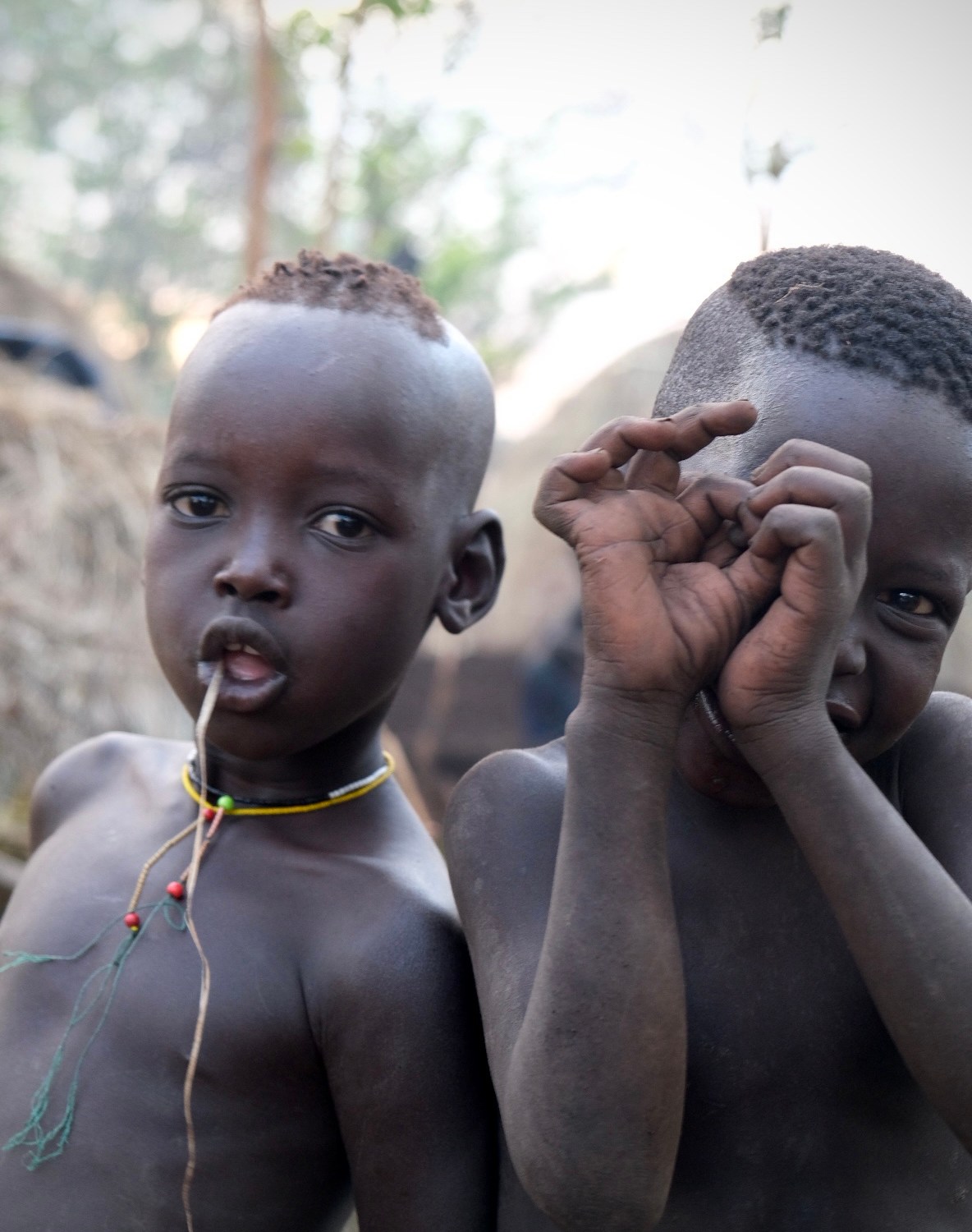
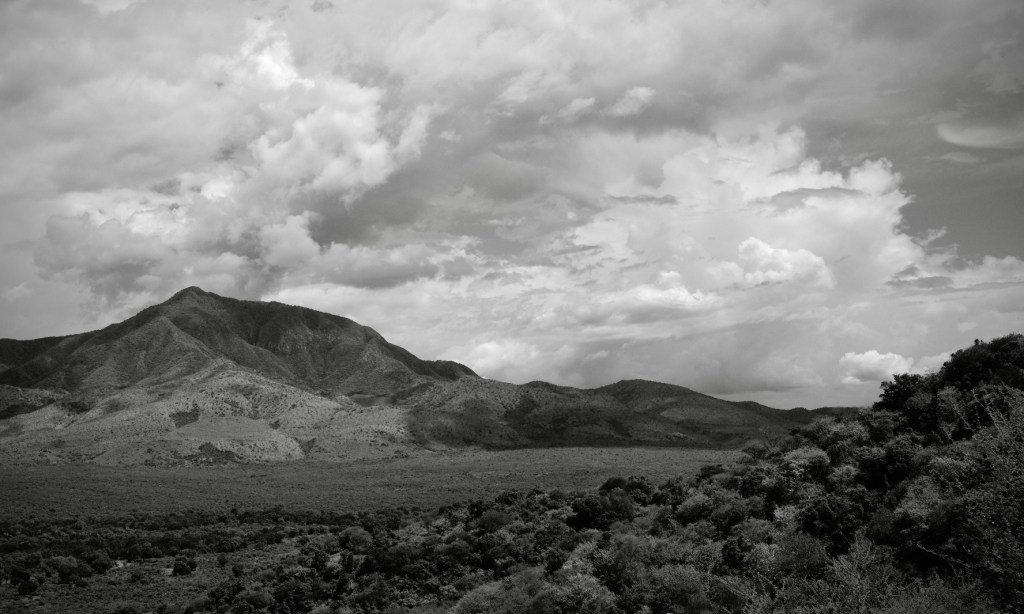
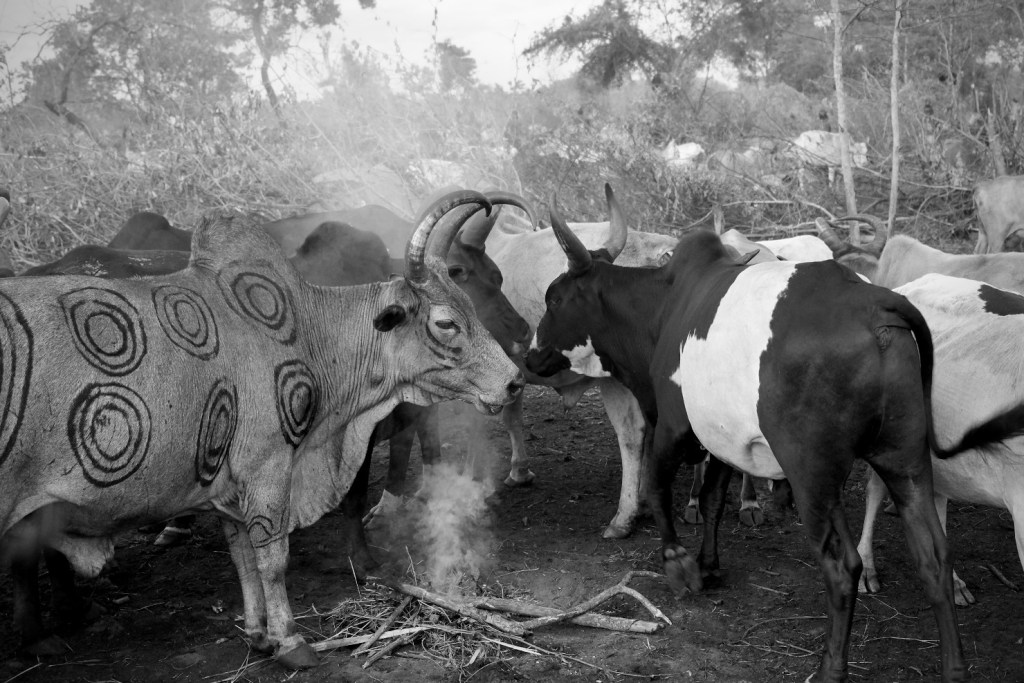
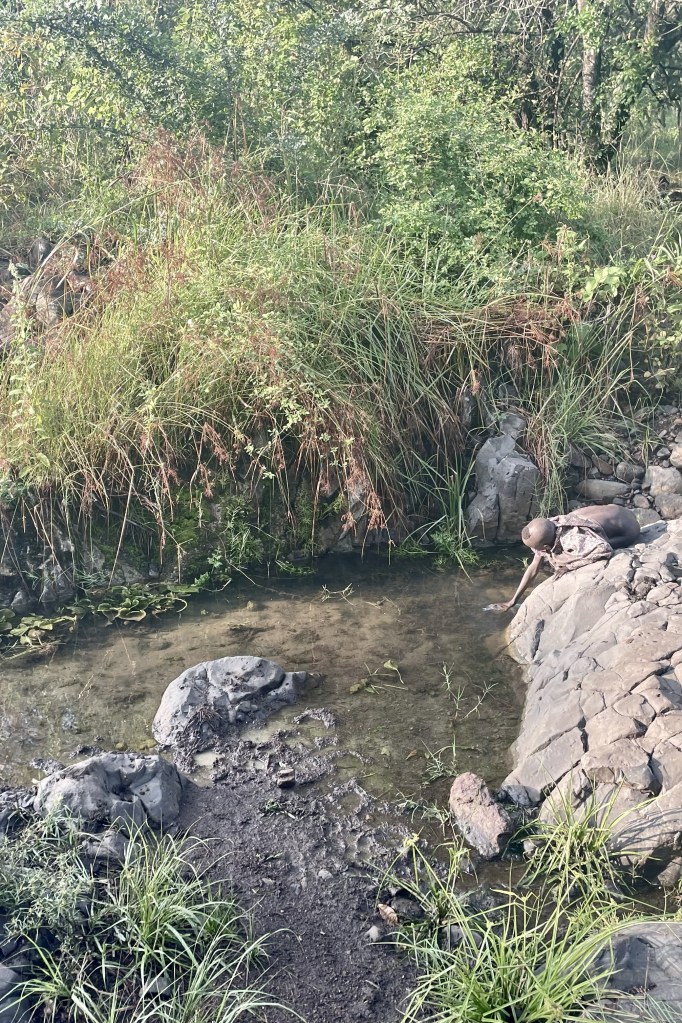
Friday 6th October. Got a lift in a 4×4 to the cattle camp a few kilometres beyond Mago Bridge. The vehicle is going to pick up Jonathan, a regular visitor from Canada who’s spent the last twenty days at the Mursi cattle camp. His advice – don’t pitch the tent in the centre of the village as you’ll continually have people tripping over the guy ropes. John leaves. We have brought with us a huge plug of chewing tobacco, 50kg of salt, coffee shells, chillis, and £40’s worth of corn flour. A Czech guy drops in – he’s spent the past year riding a dirt-bike around Africa. He spends an hour taking photos and buys a lip plate from an old woman who poses on his motorbike. He gives money to Oli for the photos. Then he leaves. It’s very hot. And the Mursi kids have a habit of sitting on you and crowding round you which makes it even hotter. Banjee is here, as is Olisiwa and Beola – it’s good to see familiar faces. I find the elders under the shade of a tree and sleep for a couple of hours. Oli walks me to a creek where there are some pools – in the afternoon the water is dirty but in the mornings it’s possible to get clear water for washing. Zoom call with Emma, Hannah and Ben in the afternoon – feels very surreal and my brain is fried. Oli tells them that the Bodi have been stealing cattle and a Mursi woman has been shot and injured. He later tells me that the woman’s husband will want revenge. Tilla, spinach, and milk are tasty. As is the Mursi coffee – chilli gives it a real kick. What am I supposed to be doing here? I went to sleep easily around 8.30 listening to the lowing of cattle. It’s still too hot but I had a good night’s rest.
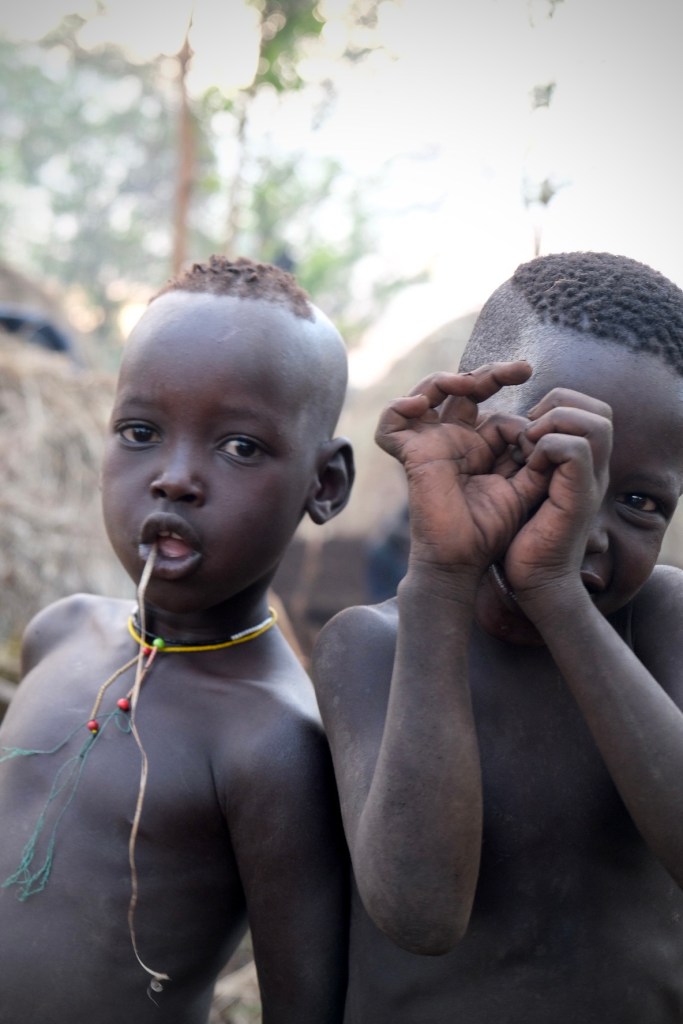
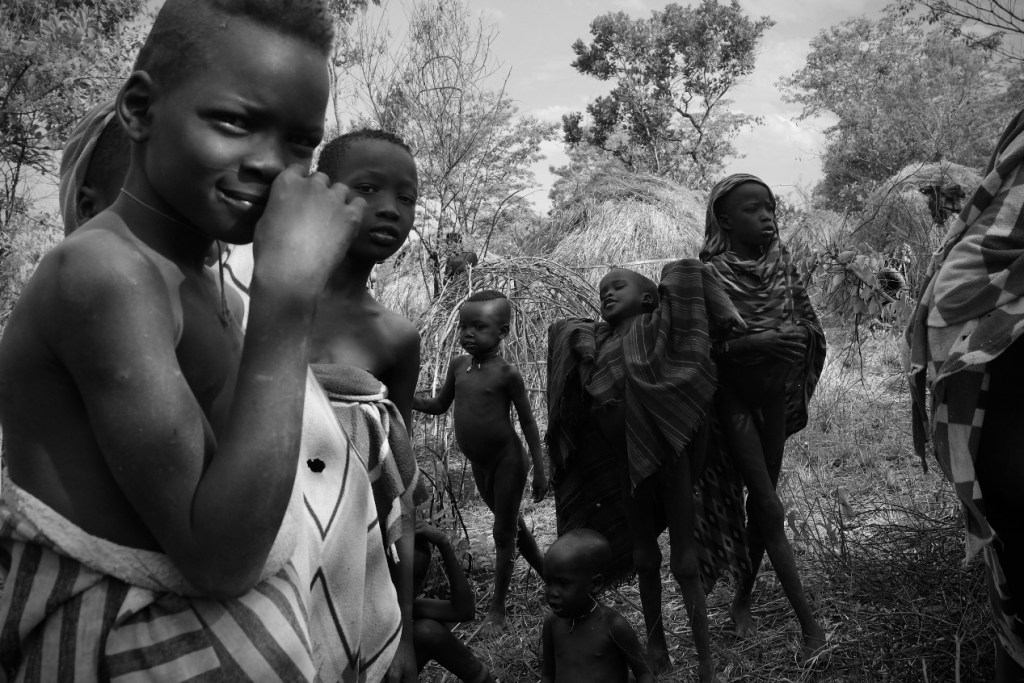
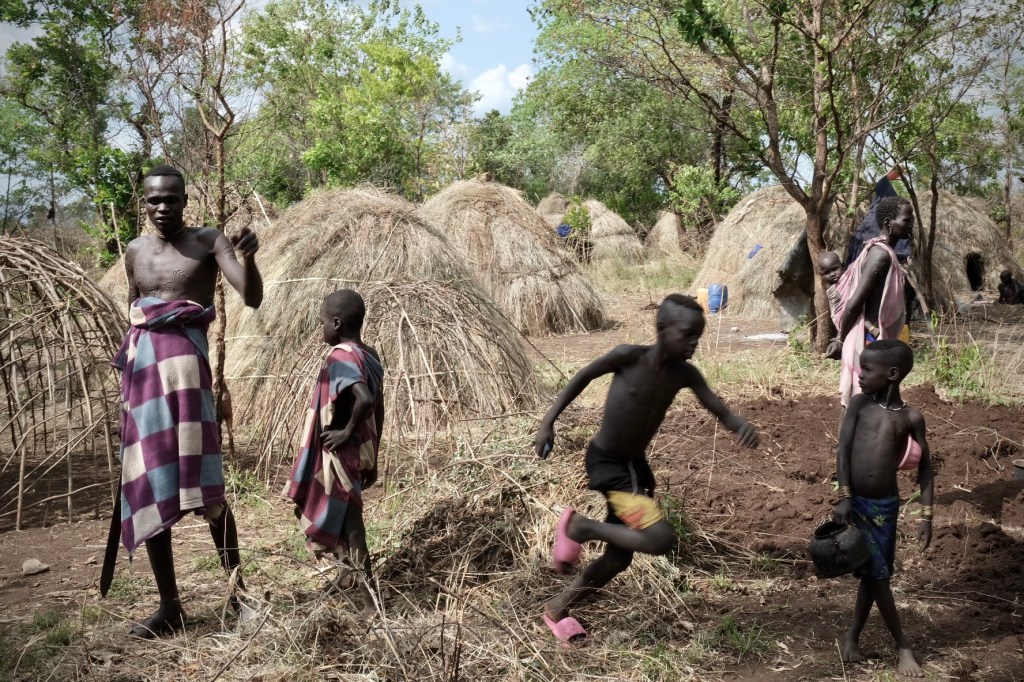

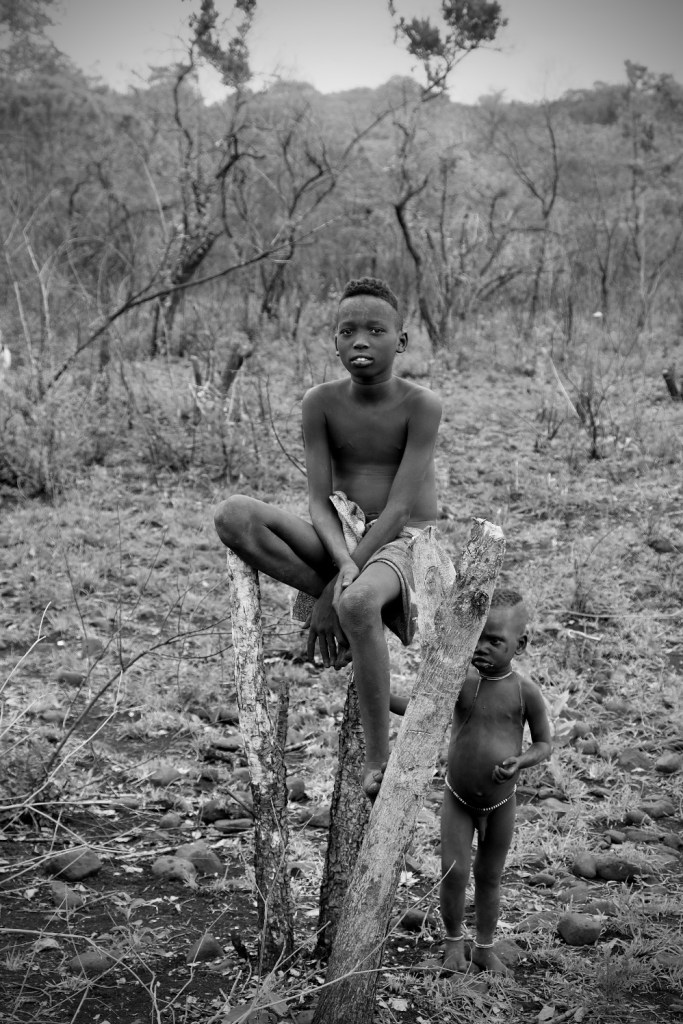
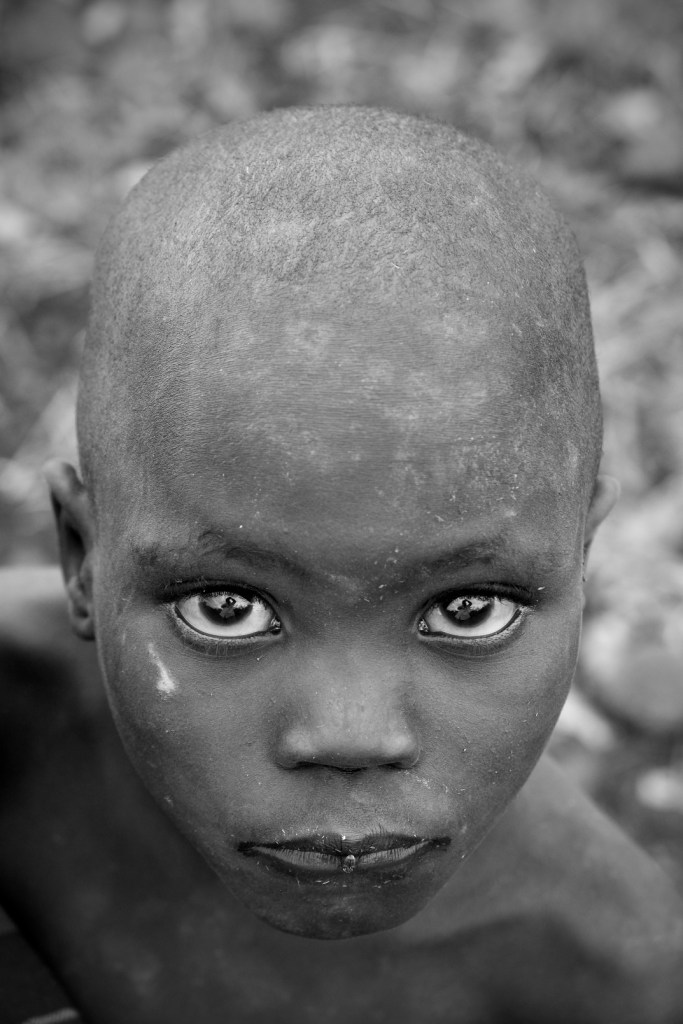
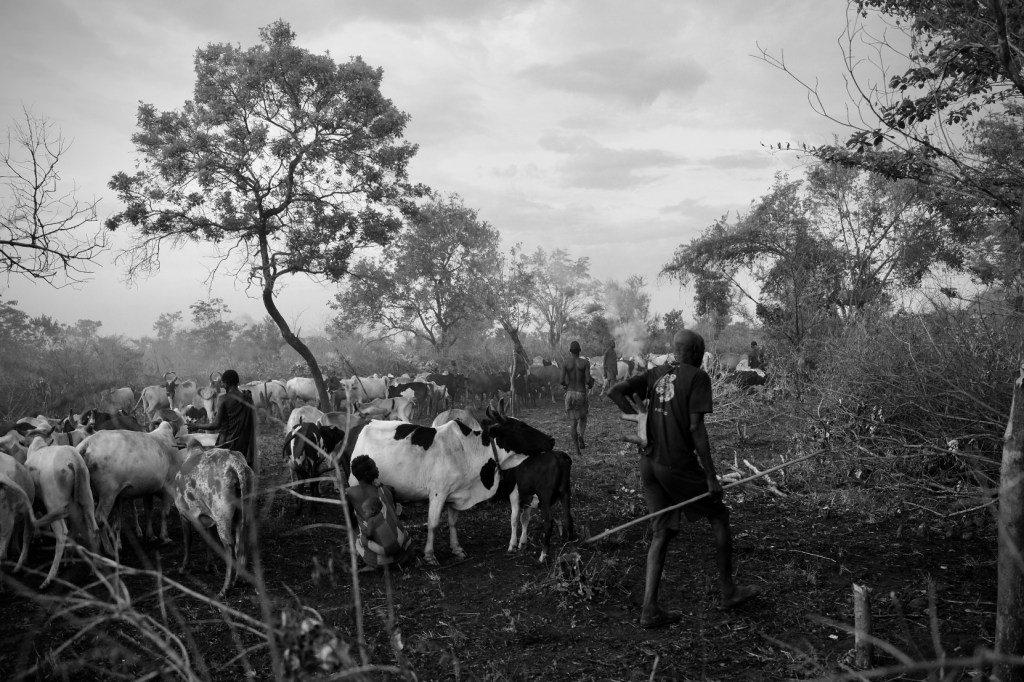
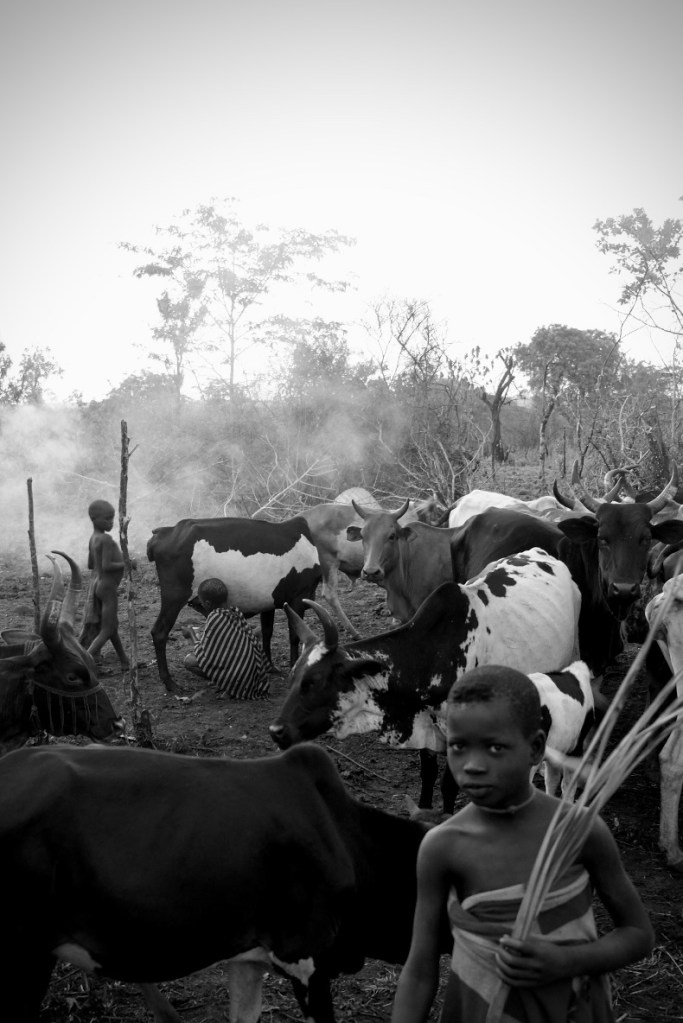
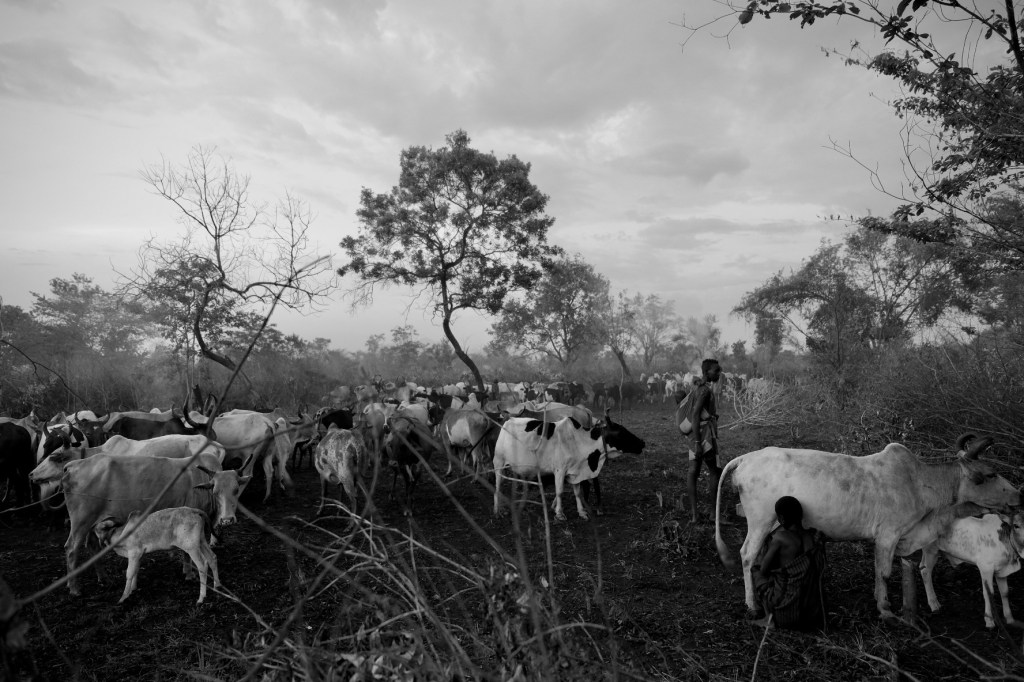
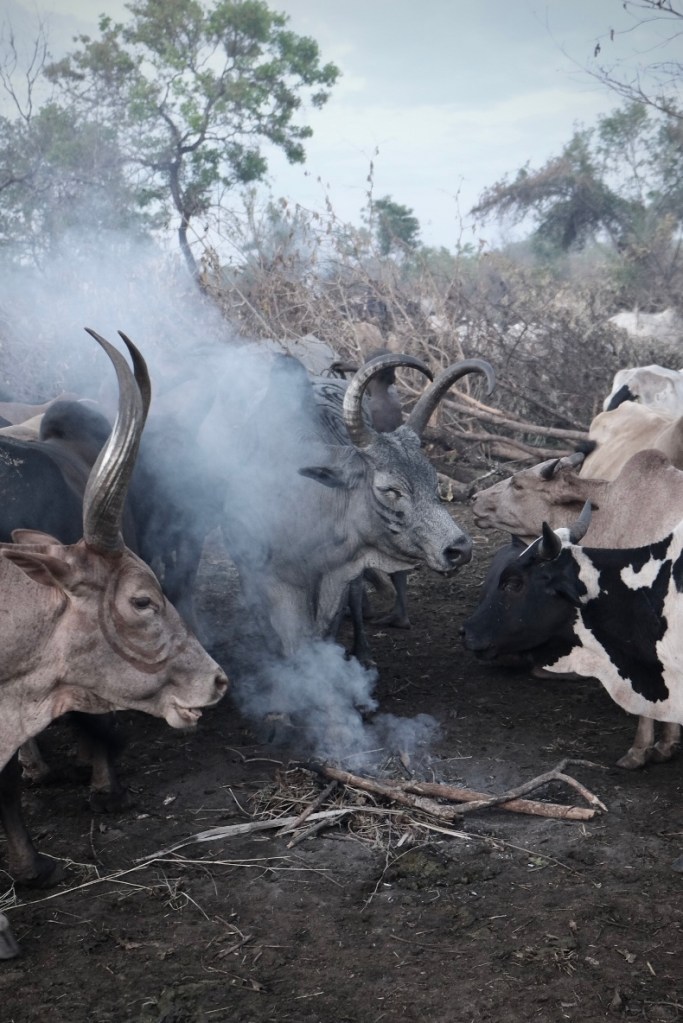
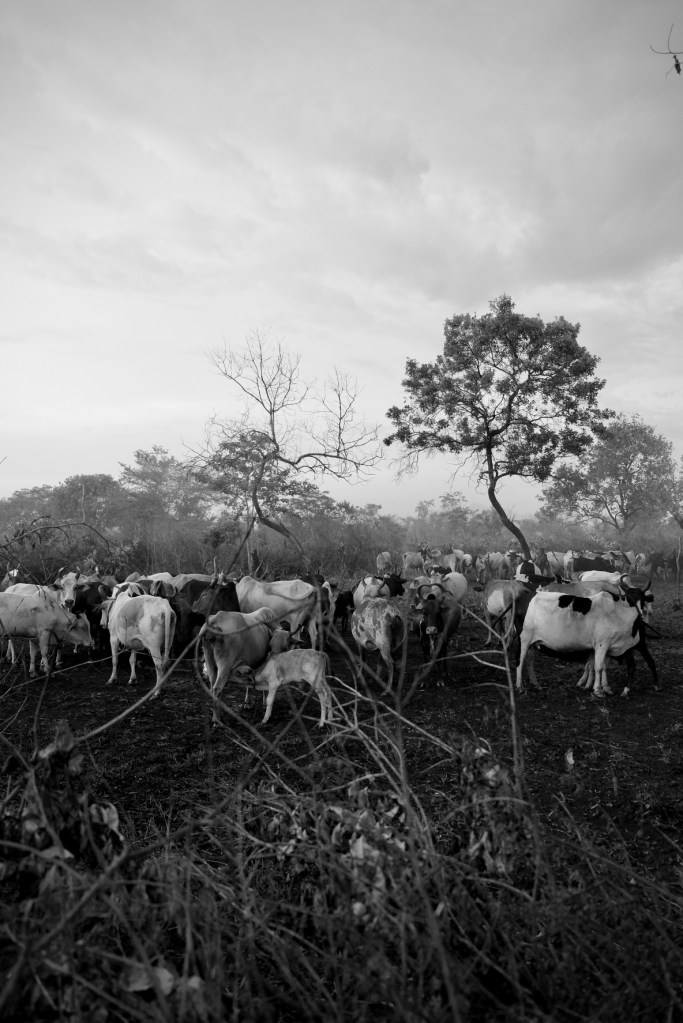
Saturday 7th October. I’m able to wash in the water from the creek. Cook noodles for breakfast – I brought my own cooking pot and spoon but must borrow a bowl. People ask me for soap, aspirin and tweezers to extract insects from inside ears. Already it’s hot. Pass the morning showing photos from the National Theatre – Banjee remembers the names. Oli is absent for much of the day. Again, I find the old guys under a tree and sleep. Why are people digging pits? Mulu (?) one of the elders, uses signs to explain that they are defensive – he points to the trench where I should hide if shooting starts. I meet Oli’s 13-year-old son Bardori. Since arriving I’ve felt frustrated at not being able to communicate – my Mursi is limited to achale and cannachale, sara ganyu a Rich and sara gunu a I nei?. Bardori teaches me some more words but all I remember are water (‘ma’) and milk (‘ura’). Oli returns and explains that conflict has broken out between Mursi and Bodi – tit-for-tat killings. He’s worried. This is the first conflict between Mursi and Bodi for sixteen years. Fighting against another pastoralist group is different from conflict with the Ari – the Bodi will attack the Mursi in their villages. But Oli’s confident that our training workshop can go ahead – the 24 committee members will walk to Mago Bridge on Monday and can then travel by jeep to Jinka on Wednesday.
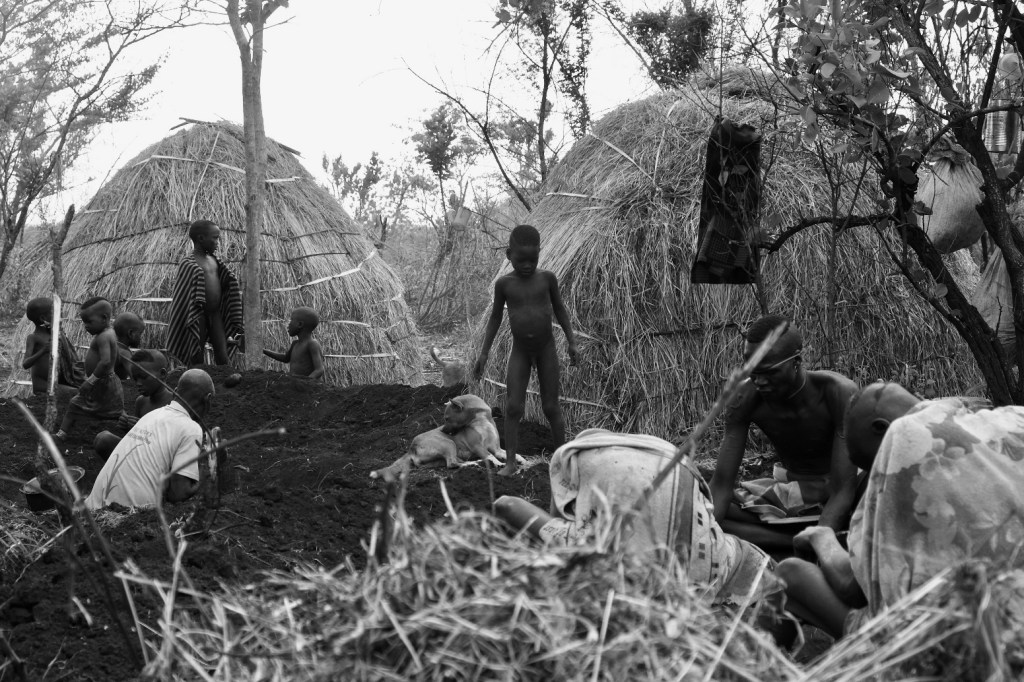
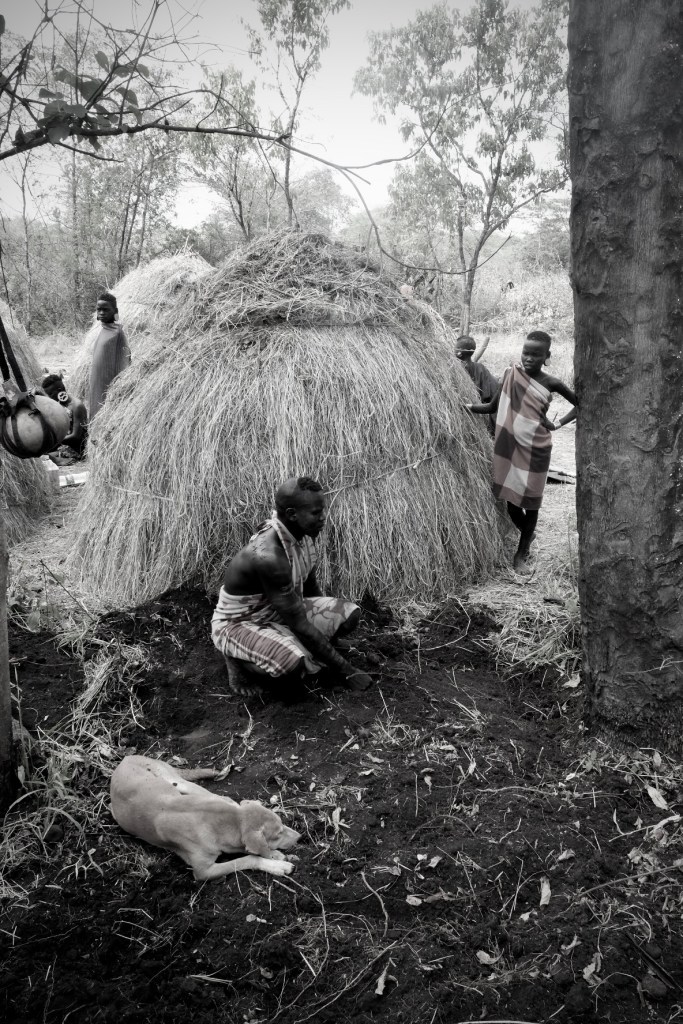
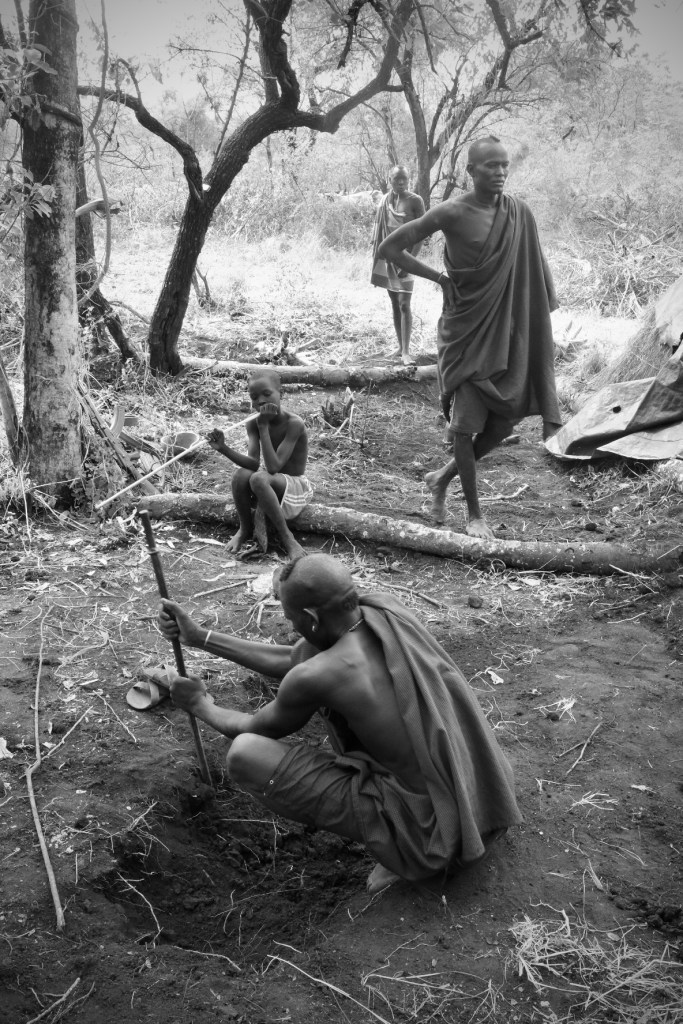
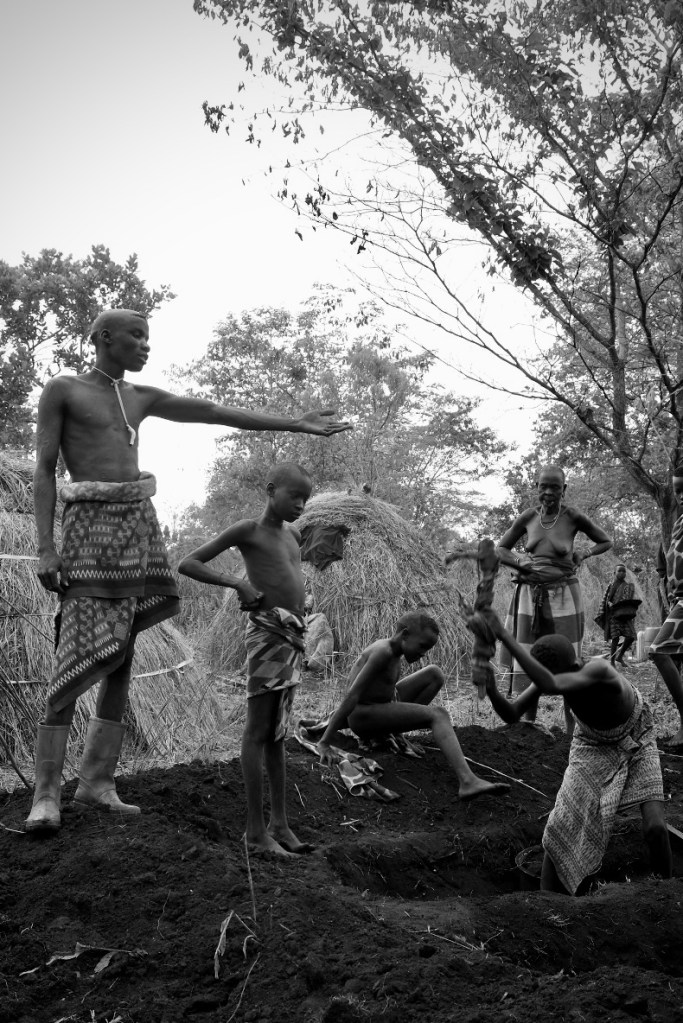
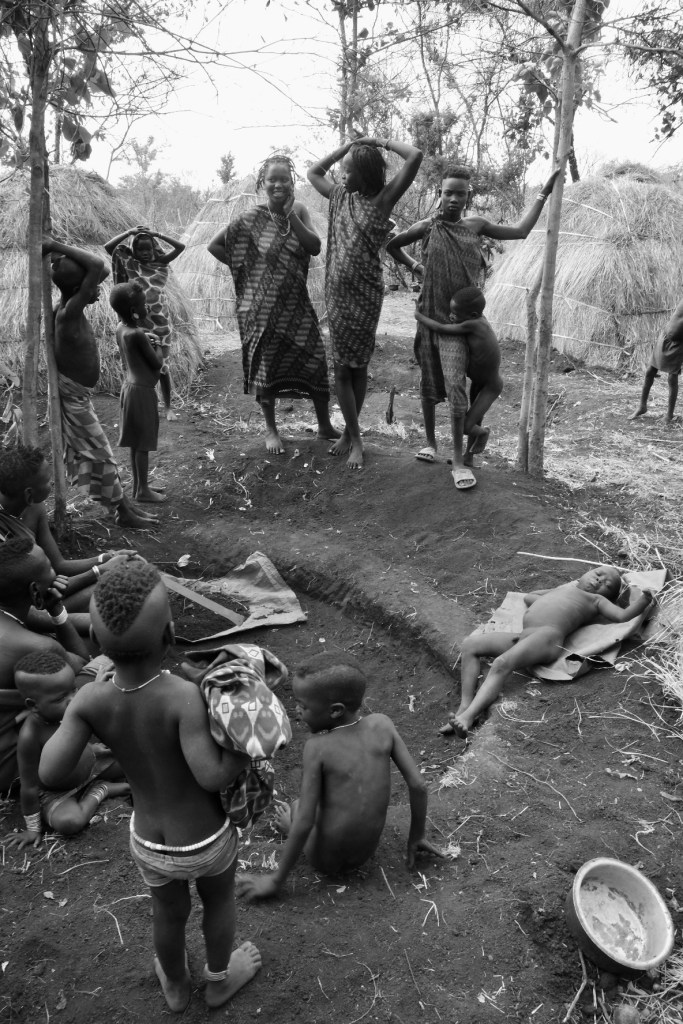
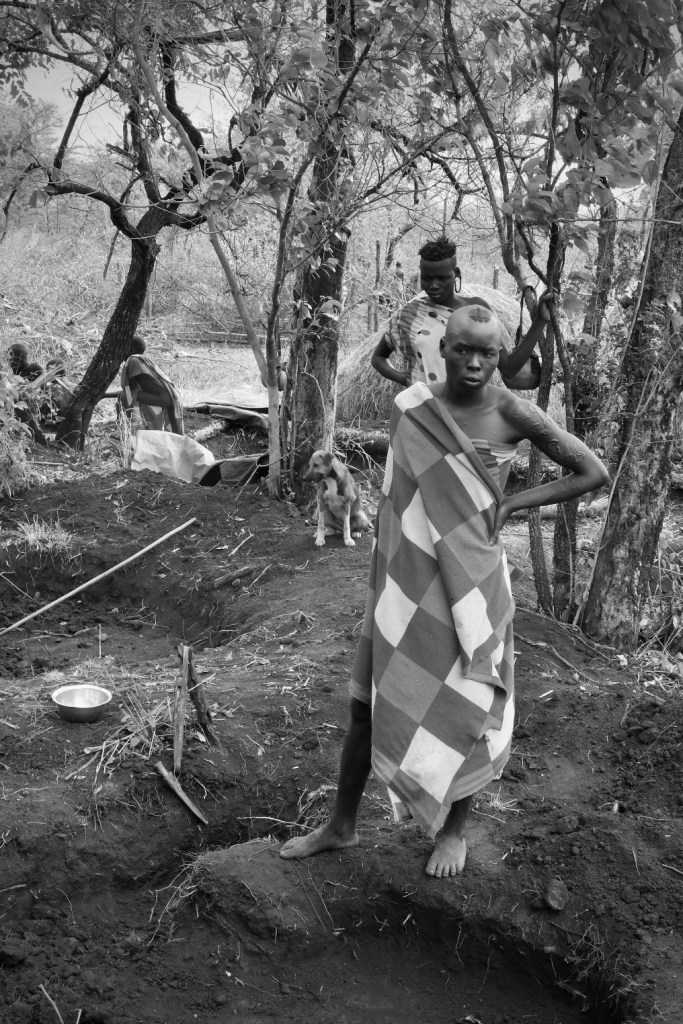
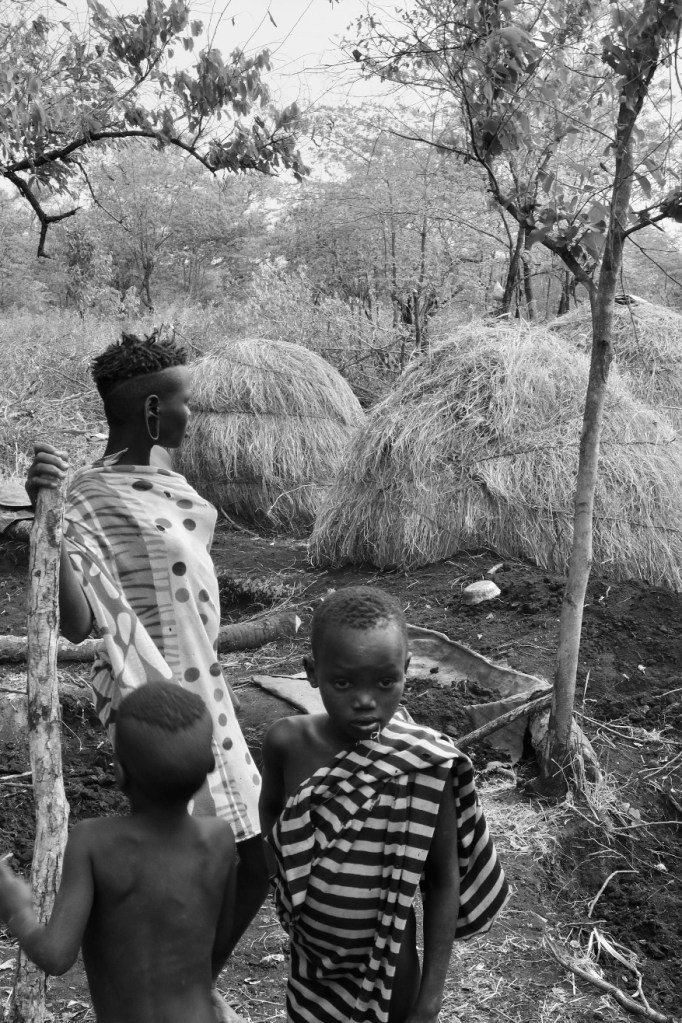
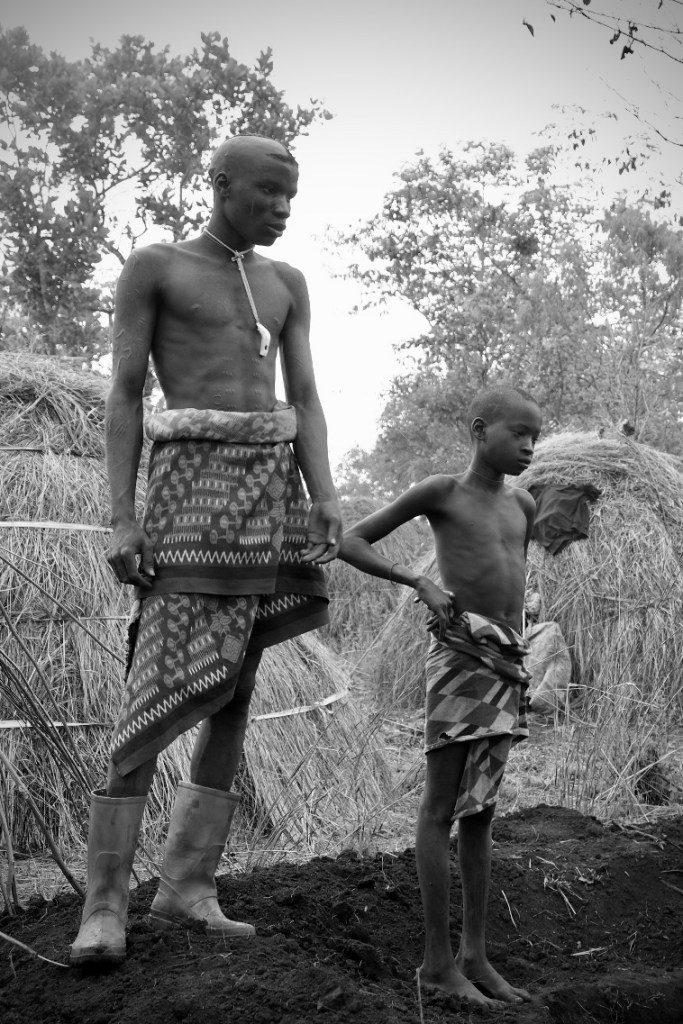
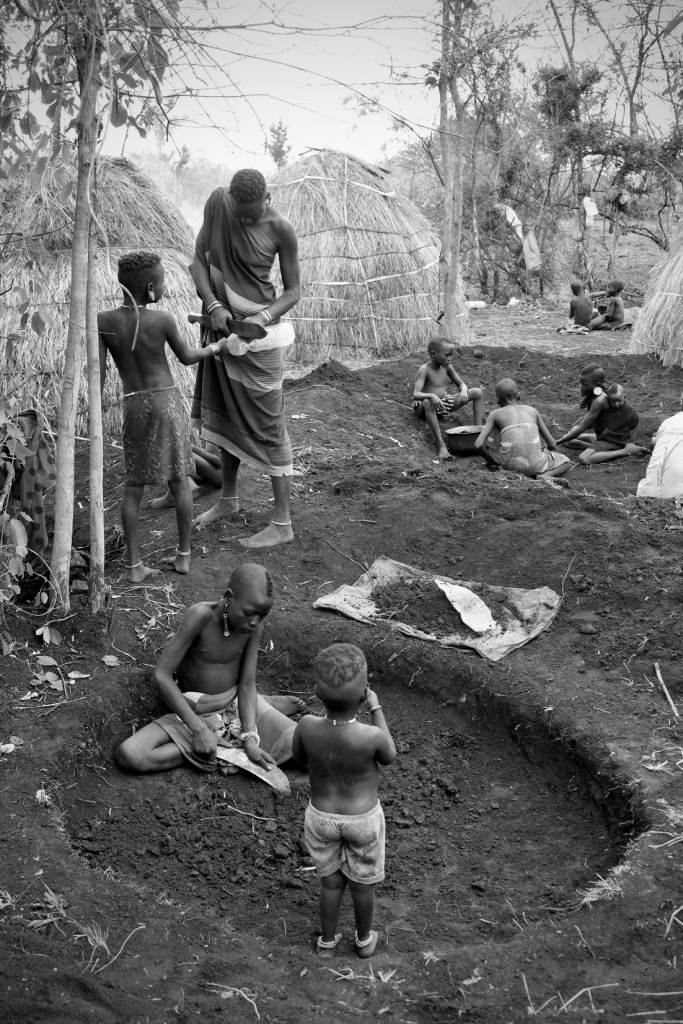


Sunday 8th October. Mulu is good company even if we don’t understand one another. Oli tells me that Mulu used to work as a guard for Ethio telecoms and is a member of one of the peace committees. I feel settled enough to begin interviewing. The separation of elders, women, young men, provides ready-made focus groups. My plan is to start discussion by asking what they know about people like me, and what they would like to know. Oli and I sat down with a group of women. We’ve just started when there’s a sudden change of atmosphere in the camp. Everyone is talking agitatedly talking to one another or listening to their phones. The news isn’t good – an attack by Bodi left three dead (two men and a girl) at nearby Mago bridge. The girl was from the Olibui clan. Attacks have taken place in other locations. There will be no more interviewing. The men sit in a circle some way from the camp discussing how to respond. When they come back Oli tells me that Bodi raiding parties are ‘everywhere’ and can attack at any time of day or night. They women can’t go out to gather spinach (leaves from trees), families will come together to make larger, better defended camps. I’ve run out of cigarettes. For the first time since arriving I get my camera and photograph the construction of trenches which has taken on a new energy – the women and kids are helping now. These trenches are places of safety where women, children, and elders (like me) can hide from stray bullets. The men will fight; the young men are carrying Kalashnikovs. Oli says some young Mursi have gone to find Bodi to kill. I exchange texts with Ben and decide that I should head back to Jinka as soon as possible. I phone Robel (EPI) several times and we exchange news; he kindly offers to send a car to fetch me the following afternoon. Oli makes the decision to postpone the training workshop – the committee members are needed in their camps and it isn’t safe for them to travel. I go to sleep listening to the lowing of cows, conversations going on around the camp, and the tooting of horns/trumpets. I’m ready to run to the trench if I hear gunfire… but should I put my shoes on first? Probably not. I sleep surprisingly well.
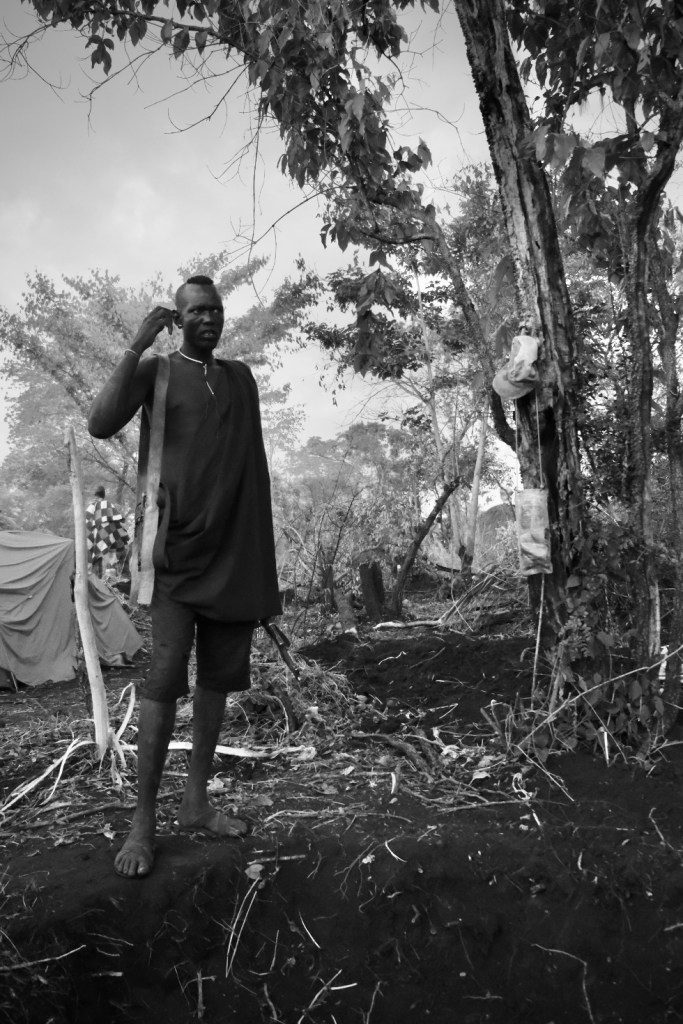

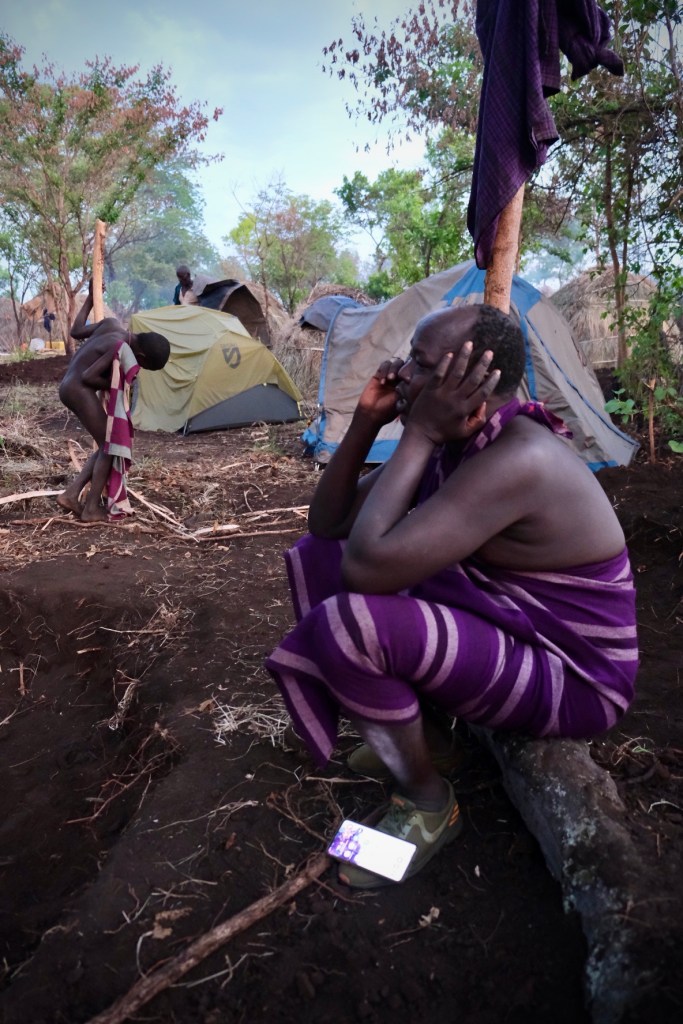
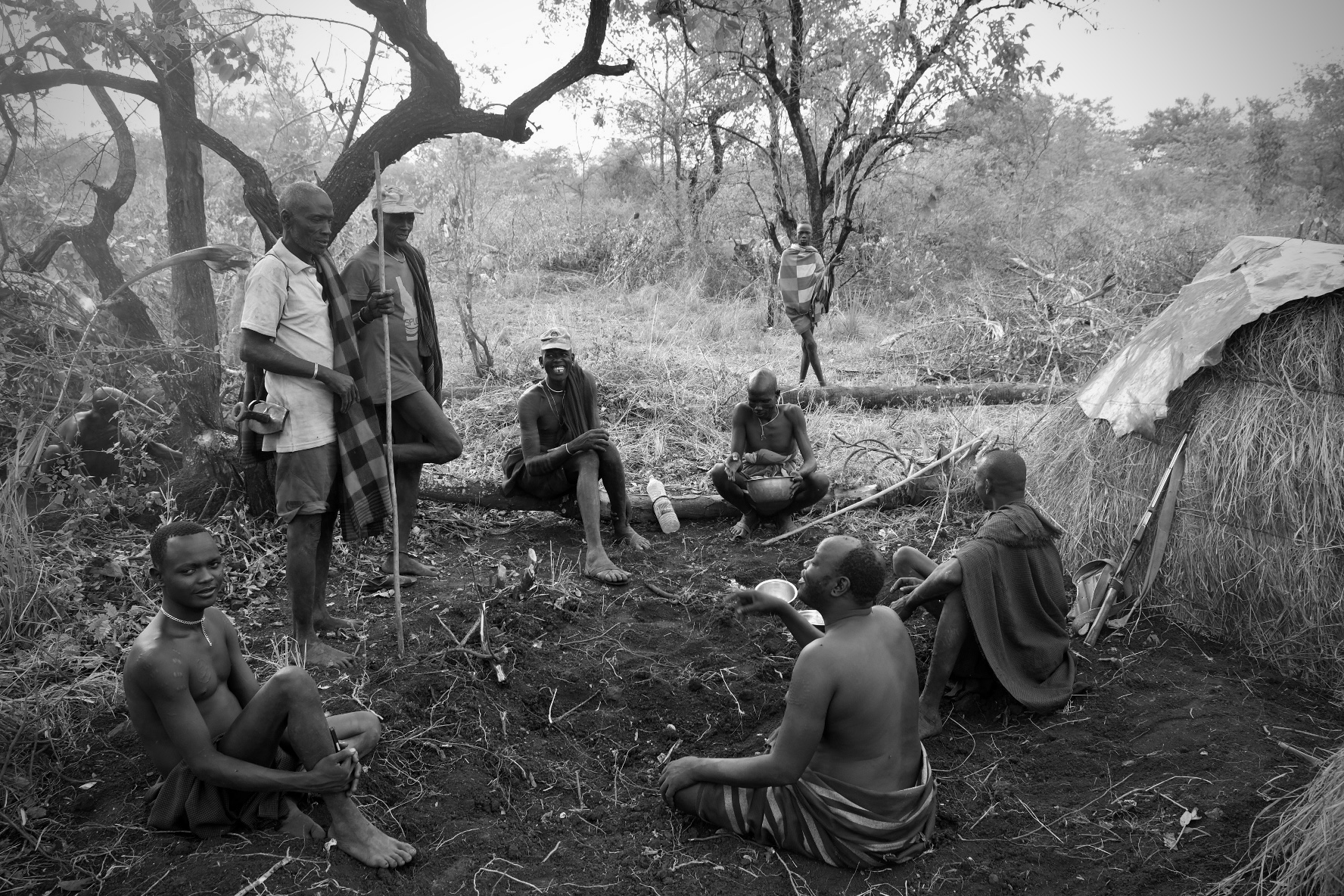
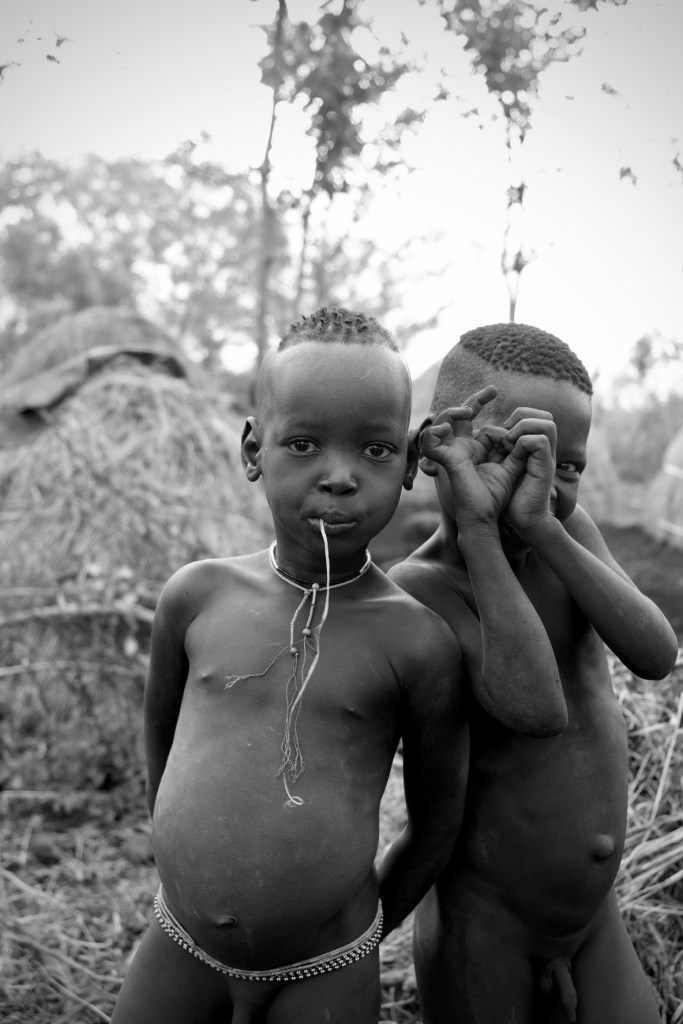
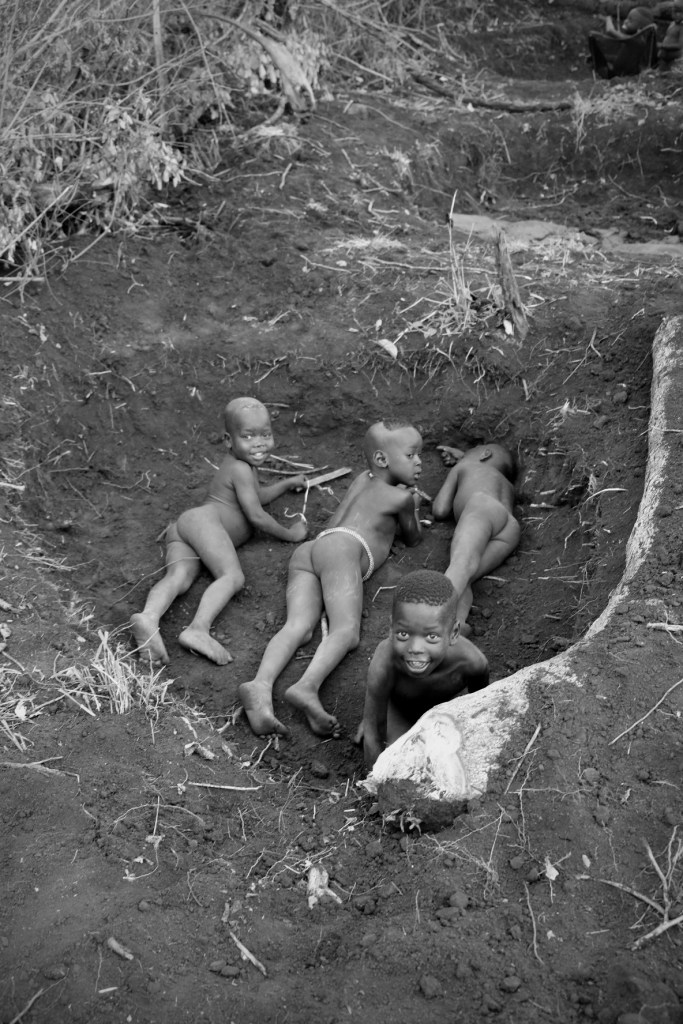
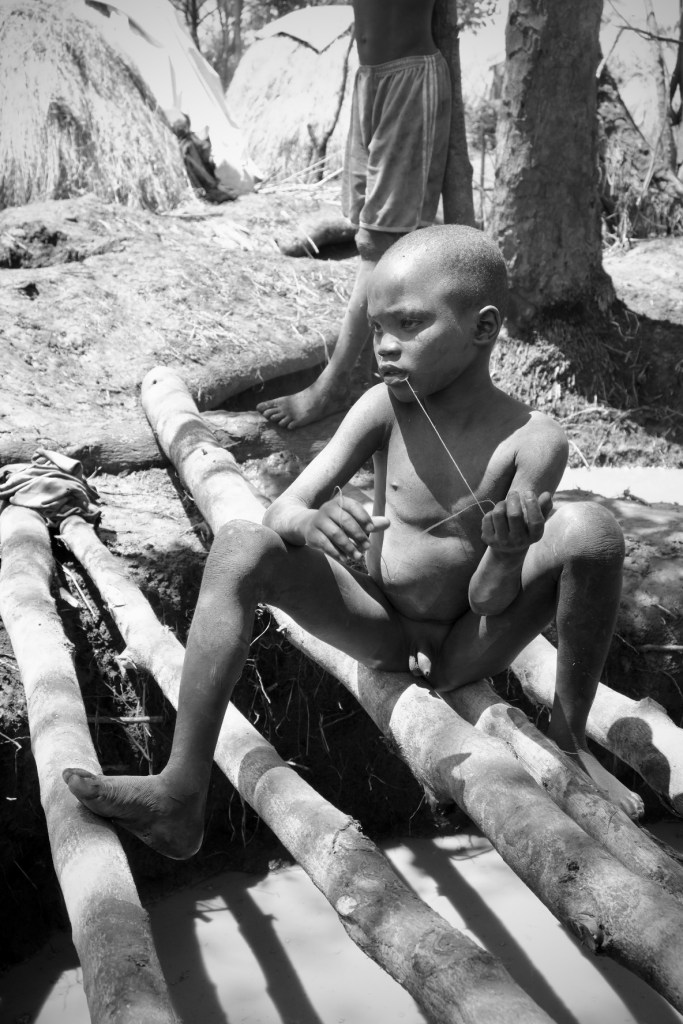


Monday 9th October. I wake up and start to pack. Two boys follow me when I go to the river to wash; are they my protectors? Back at the camp I sit with Oli and Beola. More attacks have taken place overnight. Beola complains of feeling unwell and asks for aspirin. When it gets to 9am I phone Robel who says the vehicle should be here by midday and that we’ll sort out payment when I’m back in Jinka. Beola has a pair of cheap binoculars – he says they are useful for finding cattle when they stray. This leads to talk about adding gunsights to Kalashnikovs. The kids in the village are restless – they break from digging the pits to throw dirt at one another; a stick fight takes place. I take down the tent and Banjee asks for what’s left of my soap. There’s huge excitement when a monitor lizard runs through the camp – kids jump out of the way before it’s stopped by a blow to the head supplied by one of the old guys. Everyone gathers round, throws rocks at the body and pokes at it. It’s clearly dead. We walk to the road with my rucksack. I feel cowardly leaving like this. After about ten minutes the vehicle arrives – it’s got USAID plastered down the side and a ‘no guns’ sign on the window. A policeman sits in the back with a Kalashnikov – my armed escort. Beola wants to come to Jinka for treatment but USAID has a policy that they don’t give lifts. He comes by bus the next day and after malaria is ruled out he’s diagnosed with typhoid. He’s given an injection in his butt and three types of anti-biotics (treatment at the Mursi clinic costs 1600 birr). Before he leaves, I buy multiple bars of soap to take back to the cattle camp. I also give him a camera and batteries to pass on to Oli.

 English Puhal